
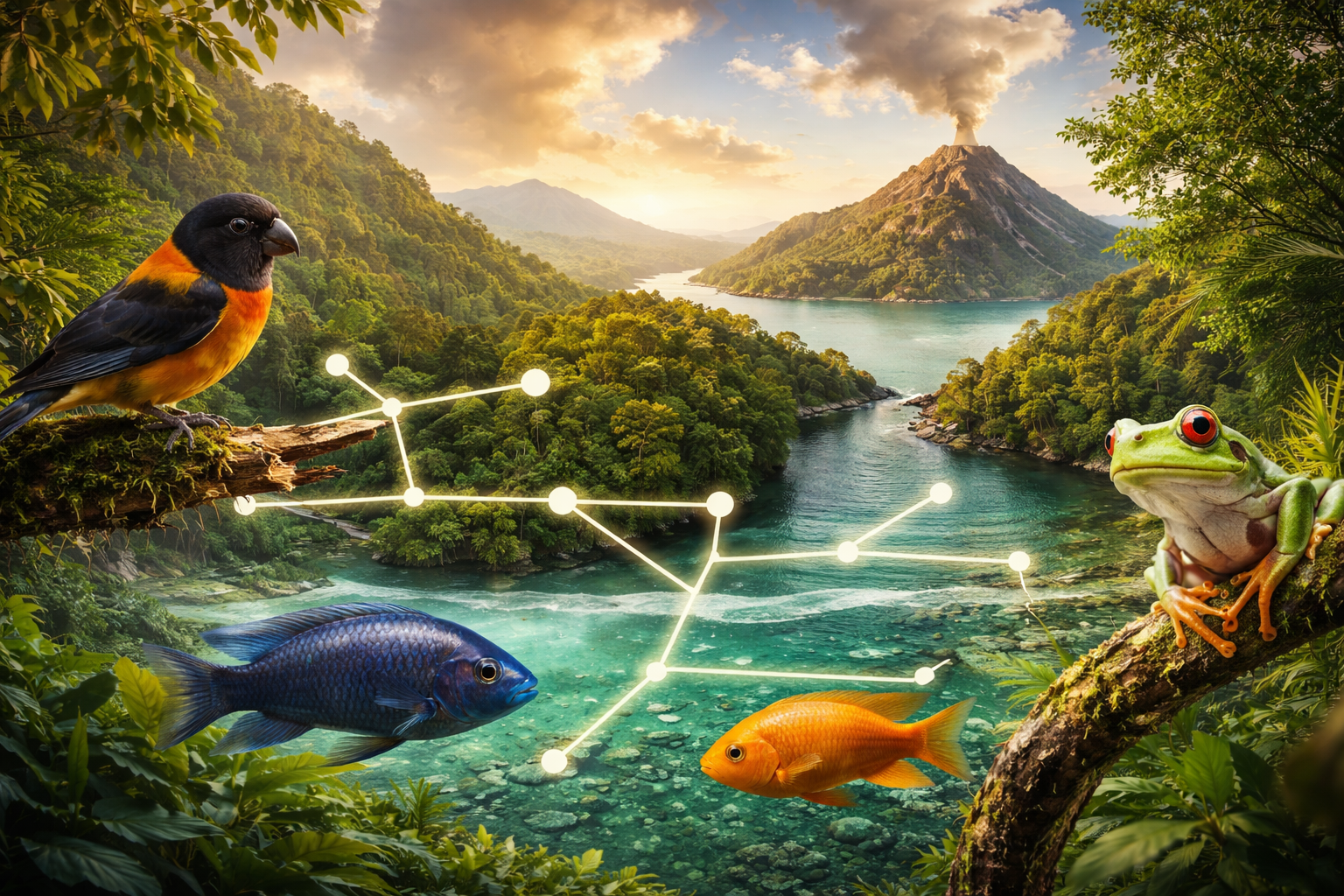
Speciering and Biodiversity: Inside Nature’s Method of Species Formation
Speciering and Biodiversity: Inside Nature’s Method of Species Formation
Biodiversity is not just a list of species on a planet. It is a living, changing story written across forests, oceans, deserts, and city parks. At the heart of that story is Speciering, the process by which one lineage splits into two or more distinct species over time. It is how nature turns variation into variety, and how ecosystems gain the richness that makes them resilient, productive, and fascinating.
People often imagine new species appearing in a dramatic moment, like a sudden transformation. In reality, Speciering is usually gradual. It is more like a relationship slowly changing until two groups no longer recognize each other as the same. Sometimes it is driven by geography, sometimes by ecological competition, sometimes by behavior, and often by a mix of all three. In this article, we will go deep into how Speciering works, why it happens, what it looks like in real nature, and why it is one of the most important engines behind biodiversity.
What Speciering Really Means
In the simplest terms, Speciering happens when a population becomes split into groups that evolve separately, eventually becoming reproductively isolated. Reproductive isolation means that individuals from the two groups either do not mate, cannot mate, or produce offspring that are less viable or less fertile.
That is the key idea. A species is not only defined by what it looks like, but by its gene flow. If genes regularly move between groups through mating, the groups tend to stay genetically similar. If gene flow is reduced or cut off, evolution can pull them in different directions.
It is also important to know that “species” can be defined in multiple ways:
- Biological species concept: species are groups that interbreed and produce fertile offspring.
- Morphological species concept: species are defined by physical traits.
- Phylogenetic species concept: species are the smallest distinct branches on the evolutionary tree.
In practice, biodiversity scientists use all of these, depending on the organism. Bacteria do not fit neatly into the biological concept. Fossils require morphological approaches. DNA tools often support phylogenetic frameworks. But regardless of definition, Speciering is about lineages becoming independently evolving units.
The Big Drivers of Speciering
Speciering does not have one single cause. It is usually powered by a combination of evolutionary forces:
1) Natural Selection
Selection favors traits that improve survival or reproduction in a particular environment. If two groups face different environments, they may evolve different adaptations. Over time, these differences can reduce interbreeding.
2) Genetic Drift
Drift is random change in gene frequencies, strongest in small populations. Drift can push isolated groups apart genetically even without strong selection.
3) Mutation
Mutation introduces new genetic variation. Most mutations are neutral or harmful, but some provide advantages in specific environments.
4) Gene Flow
Gene flow is the movement of genes between populations through reproduction. It acts like a mixing force that prevents divergence. Speciering often requires reducing gene flow.
5) Sexual Selection
Traits that improve mating success can drive rapid divergence. Think of birds with different songs, or fish with different color patterns. If mate choice changes, reproductive isolation can evolve quickly.
The Core Mechanism: Barriers to Gene Flow
Reproductive isolation typically develops through barriers that prevent successful interbreeding. These barriers come in two main categories:
Prezygotic Barriers (Before Fertilization)
These stop mating or fertilization from happening at all.
- Geographic isolation: separated by mountains, rivers, oceans, or distance.
- Habitat isolation: living in different habitats in the same area, like lake shore versus deep water.
- Temporal isolation: breeding at different times, different seasons, or different times of day.
- Behavioral isolation: different songs, scents, courtship dances, or mating signals.
- Mechanical isolation: incompatible reproductive structures.
- Gametic isolation: sperm and egg do not successfully fuse.
Postzygotic Barriers (After Fertilization)
These happen when mating occurs, but offspring are impaired.
- Hybrid inviability: hybrids do not develop well or die early.
- Hybrid sterility: hybrids survive but cannot reproduce, like mules.
- Hybrid breakdown: first generation hybrids are okay, but later generations are weak or sterile.
Speciering often begins with a weak barrier, then strengthens over time. Once barriers are strong enough, lineages remain distinct even if they come back into contact.
The Main Types of Speciering
Allopatric Speciering: Geography Starts the Split
Allopatric Speciering occurs when a population is physically separated, and gene flow stops or becomes very rare. This is the classic model and is common in nature.
How it happens:
- A barrier forms (a river shifts, a mountain rises, a glacier advances, a storm moves individuals to an island).
- Two populations become isolated.
- Selection, drift, and mutation cause divergence.
- Reproductive isolation evolves.
Islands are famous for this. Isolation allows populations to adapt to local conditions and drift in unique directions. Over time, these isolated groups can become distinct species.
Why it matters for biodiversity: allopatric Speciering is one reason island chains, mountain ranges, and fragmented habitats often have high endemism, meaning many species exist nowhere else.
Peripatric Speciering: The Power of Small Founder Populations
Peripatric Speciering is similar to allopatric, but the isolated population is very small, like a few individuals colonizing a new area.
Small size matters because:
- genetic drift is stronger
- founder effects can shift gene frequencies dramatically
- selection can be intense in a new environment
This mechanism is often suggested for island colonization events, where a small group establishes a new population and rapidly diverges.
Parapatric Speciering: Neighboring Populations Diverge
In parapatric Speciering, populations are adjacent with limited gene flow. Imagine a species spread across a landscape where the environment gradually changes from one end to the other, like soil chemistry shifting from normal ground to heavy metal rich terrain.
Speciering can occur if:
- selection pressures differ strongly across the range
- individuals mate mostly with nearby neighbors
- hybrids are less fit in either environment
A hybrid zone may form where the two groups meet. Over time, selection can strengthen differences and reduce interbreeding further.
Sympatric Speciering: Divergence Without Geographic Separation
Sympatric Speciering is the most debated historically because it happens in the same geographic area. But it is real, especially in certain systems.
How can it happen?
- Ecological specialization: populations start using different resources or microhabitats.
- Assortative mating: individuals prefer mates that use the same resource or show the same traits.
- Strong disruptive selection: extremes do better than intermediates.
A classic pattern is when insects shift to a new host plant. If mating happens on the host plant, a host shift can instantly reduce gene flow.
In aquatic systems, sympatric Speciering can occur when fish specialize in different depths, food types, or breeding sites, even within the same lake.
Speciering That Happens Fast: Polyploidy and Chromosomal Change
In plants, Speciering can be surprisingly fast, sometimes happening in a single generation through polyploidy, which means having extra sets of chromosomes.
- Autopolyploidy: chromosome duplication within a species.
- Allopolyploidy: chromosome duplication after hybridization between species.
Polyploid individuals can become reproductively isolated from the parent population because chromosome numbers do not match well during meiosis. This can create a new species quickly.
Chromosomal rearrangements, like inversions and translocations, can also contribute to isolation by reducing successful recombination in hybrids and promoting divergence.
Hybridization: Not Just a Mistake, Sometimes a Creative Force
Hybridization is often thought of as the opposite of Speciering, because it mixes lineages. But it can also contribute to new species formation.
There are several ways hybrids matter:
- Reinforcement: if hybrids have lower fitness, natural selection favors stronger mate discrimination, accelerating isolation.
- Hybrid speciation: hybrids can form a stable lineage with a unique ecological niche.
- Adaptive introgression: genes from one species can move into another, providing useful adaptations.
In some groups, especially plants and certain animals, hybridization is part of the normal evolutionary toolkit, not a rare accident.
Adaptive Radiation: When Speciering Explodes Into Many Forms
Adaptive radiation is what happens when a lineage undergoes rapid Speciering, producing many species in a relatively short evolutionary time. This often occurs when:
- a population colonizes a new region with many unoccupied niches
- a key innovation evolves, unlocking new resources
- environmental change creates new ecological opportunities
In adaptive radiations, species diversify in traits linked to ecology, like beak shapes, jaw structures, feeding behavior, or habitat use. This is biodiversity being built at high speed.
Speciering and the Ecology of Biodiversity
Speciering is not separate from ecology. It is shaped by ecological interactions, and it reshapes ecosystems in return.
Niche Differentiation
When new species form, they often occupy different niches. This reduces direct competition and allows multiple species to coexist.
Coevolution
Interactions between species can drive Speciering. Examples include:
- pollinators and flowers evolving together
- predators and prey escalating adaptations
- parasites and hosts forming evolutionary arms races
Community Assembly
As new species form, communities gain complexity. More species can mean more stable food webs, better nutrient cycling, and greater resilience to disturbances.
The Genetics Behind Speciering: What Changes Inside the DNA
From a genetic perspective, Speciering involves the build up of differences across the genome, especially in regions tied to adaptation and reproduction.
Key genetic themes include:
- Divergence at selected loci: genes under different selection pressures diverge early.
- Genomic islands of divergence: certain regions diverge more than the rest, especially when gene flow still occurs.
- Dobzhansky-Muller incompatibilities: harmful interactions between genes from different lineages can reduce hybrid fitness without either lineage having “bad genes” on its own.
- Gene regulation shifts: changes in when and where genes are expressed can create major differences with relatively small DNA sequence changes.
Modern genomics has made it clear that Speciering is often messy. Different parts of the genome can tell different stories, especially when hybridization occurs.
Reinforcement: When Selection Makes Isolation Stronger
When two diverging groups come into contact, they may hybridize. If hybrids are less fit, natural selection can favor individuals that avoid hybrid mating. This strengthening of prezygotic barriers is called reinforcement.
Reinforcement is important because it shows Speciering can be completed even after initial separation ends. It is one reason why closely related species often show strong differences in mating signals where they overlap, but weaker differences where they live apart.
How Scientists Study Speciering in Real Nature
Studying Speciering means combining multiple lines of evidence:
- Field observations: habitat use, mating behavior, breeding timing.
- Common garden experiments: raising organisms in the same conditions to test genetic versus environmental effects.
- Crossing experiments: testing hybrid viability and fertility.
- Population genetics: measuring gene flow, divergence, and population structure.
- Phylogenetics: reconstructing evolutionary relationships.
- Genomics: identifying regions under selection and incompatibility genes.
No single method is enough. Speciering is best understood when ecology, behavior, and genetics are studied together.
Speciering in the Modern World: Conservation and Human Influence
Humans now shape the conditions under which Speciering happens, often in ways that threaten biodiversity.
Habitat Fragmentation
Fragmentation can isolate populations, which might seem like it could increase Speciering, but it often causes population sizes to shrink. Small isolated populations face higher extinction risk before Speciering can occur.
Climate Change
As climates shift, species ranges move. New contacts form between species that were previously separated. This can increase hybridization, alter selection, and disrupt locally adapted populations.
Invasive Species
Invasives can introduce new competitors, predators, and diseases. They can also hybridize with native species, sometimes causing genetic swamping, and sometimes producing novel hybrid lineages.
Pollution and Urban Environments
Some organisms adapt rapidly to cities and polluted habitats. In certain cases, strong selection in these environments can drive divergence. Whether that becomes full Speciering depends on whether reproductive isolation develops.
From a conservation perspective, understanding Speciering is important because it explains why protecting genetic and population diversity matters. Today’s populations are tomorrow’s species, but only if they survive long enough for the process to unfold.
Speciering Is Not Always a Clean Line
A final truth is that Speciering is often not a sharp boundary. Nature contains:
- ring species patterns where neighboring populations interbreed but distant ones do not
- hybrid zones that persist for long periods
- species complexes that are hard to separate morphologically
- cryptic species that look identical but are genetically distinct
This does not mean the concept is broken. It means evolution is dynamic. Categories are human tools, while life follows gradients, exceptions, and experimentation.
Why Speciering Is the Engine of Biodiversity
Biodiversity grows when lineages split, specialize, and persist. Speciering supplies the raw increase in species number, but it also produces ecological variety, genetic richness, and evolutionary potential.
When you see a coral reef packed with fish species, a forest layered with insects and birds, or a mountain range with plants found nowhere else, you are seeing the long outcome of Speciering repeated countless times. It is the mechanism that turns Earth into a planet of living possibilities.
And it is not only ancient history. Speciering is happening now, in lakes, islands, mountain valleys, and even human altered habitats. Every time populations experience new selection pressures, new barriers, and new mating rules, the story begins again.
Read More Blogs: Gaby Jamieson: Everything You Need to Know About Her Life, Career, and Story