The Future of Brand Video Marketing: How AI Is Changing Content Creation
How AI Is Transforming Video Production and Personalization for Brands in 2026
Introduction: The AI Revolution in Video Content
Artificial Intelligence (AI) is no longer a futuristic concept—it has become a powerful force reshaping how brands create, edit, and distribute video content. In an era where attention spans are shrinking and competition for visibility is intense, AI is enabling brands to produce high-quality videos faster, smarter, and more cost-effectively than ever before. From automated editing to hyper-personalized video experiences, AI is transforming video production and redefining how brands engage with audiences.
This article explores how AI is changing video production workflows, improving personalization, and helping brands connect more meaningfully with consumers.
The Growing Importance of Video in Brand Marketing
Video has emerged as the most effective form of digital communication. Consumers prefer video because it is engaging, easy to consume, and emotionally compelling. Businesses rely on video for marketing, advertising, training, social media, and customer communication.
However, traditional video production often requires significant time, budget, and resources. AI solves these challenges by automating complex processes while maintaining quality and creativity. As a result, brands can scale video content without sacrificing consistency or impact.
How AI Is Changing the Video Production Process
Automated Video Editing and Post-Production
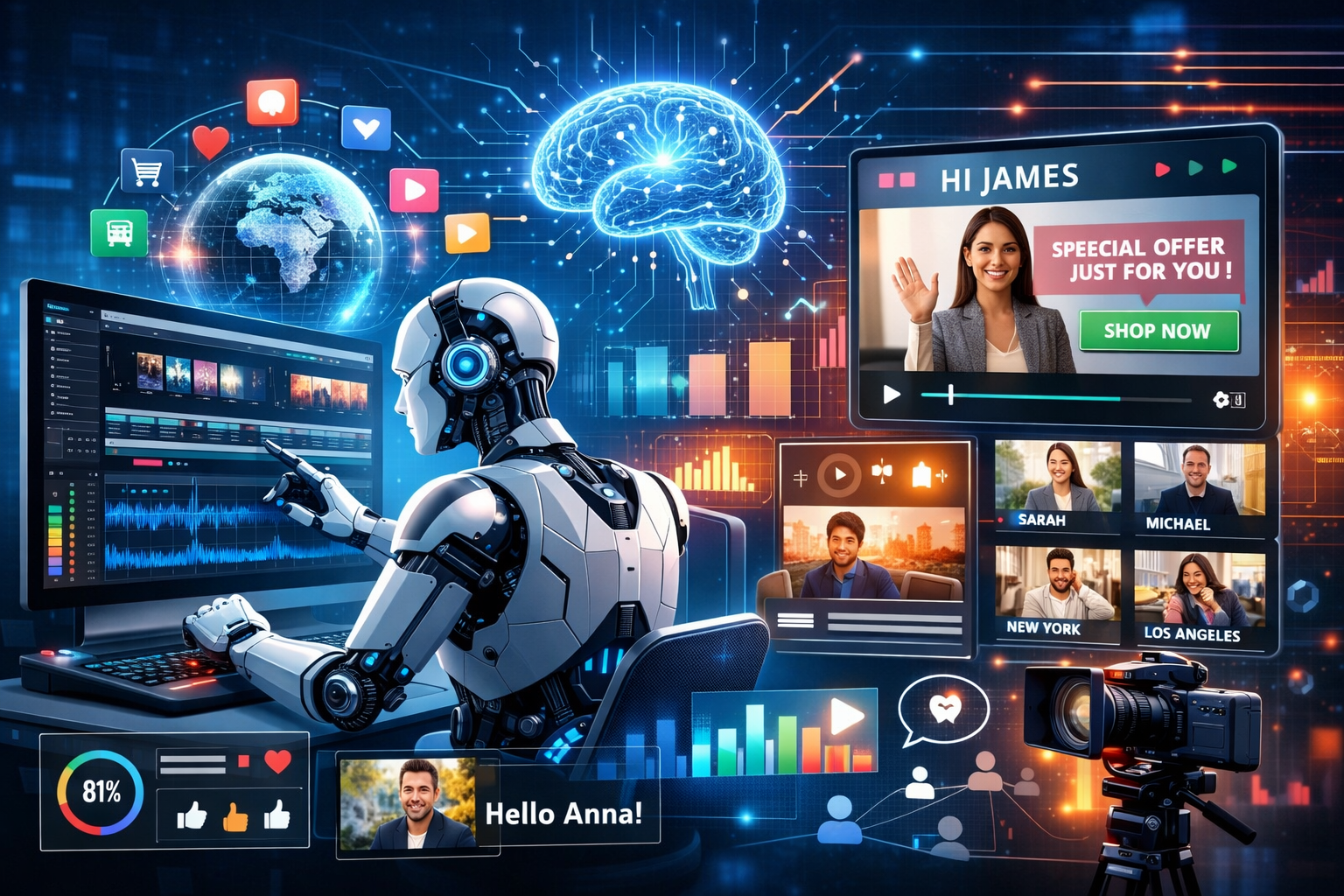
One of the biggest ways AI is transforming video production is through automation. AI-powered tools can now handle tasks such as trimming clips, syncing audio, color correction, and adding transitions. These tools analyze footage and automatically select the most relevant scenes based on visual and audio cues.
This dramatically reduces editing time and allows production teams to focus more on storytelling and creative direction. Faster turnaround times mean brands can respond quickly to trends and market demands.
Smart Video Script and Content Generation
AI is also influencing the pre-production stage. Advanced AI tools can analyze audience data, trending topics, and performance metrics to generate video scripts and content ideas. By understanding what resonates with viewers, AI helps brands create more targeted and effective messaging.
This data-driven approach ensures that video content aligns with audience interests, increasing engagement and relevance across platforms.
AI-Powered Personalization in Video Marketing
Creating Personalized Video Experiences
Personalization has become a key factor in modern marketing success. AI enables brands to create personalized video content tailored to individual users. By using data such as user behavior, location, preferences, and purchase history, AI can dynamically adjust video elements like text, visuals, and voiceovers.
Personalized videos make audiences feel seen and valued, which significantly boosts engagement, click-through rates, and conversions.
One-to-One Video Messaging at Scale
Previously, personalized videos were expensive and time-consuming to produce. AI now makes it possible to generate thousands of customized videos automatically. Brands can send personalized product recommendations, onboarding videos, or promotional messages to large audiences without manual effort.
This level of scalability allows businesses to maintain a personal connection while reaching a broader market.
Enhancing Visual Quality with AI Technology
AI-Driven Video Enhancement
AI tools can enhance video quality by improving resolution, stabilizing shaky footage, correcting lighting, and reducing background noise. Even older or low-quality footage can be upgraded using AI-powered enhancement techniques.
For brands, this means consistently high visual standards across all video content, reinforcing professionalism and credibility.
Facial Recognition and Smart Framing
AI can analyze faces and movements within a frame to automatically adjust focus, framing, and camera angles. This is especially useful for interviews, testimonials, and live recordings. Smart framing ensures that subjects remain visually centered and engaging without manual camera adjustments.
AI and Data-Driven Video Performance Optimization
Predicting Audience Engagement
AI doesn’t just help create videos—it also helps optimize performance. By analyzing viewer behavior such as watch time, drop-off points, and interaction rates, AI provides insights into what works and what doesn’t.
Brands can use this data to refine video length, messaging, pacing, and format, resulting in higher engagement and better ROI.
Improving Video SEO and Discoverability
AI tools assist in optimizing video titles, descriptions, captions, and thumbnails for search engines and platforms. Automatic captioning and transcription improve accessibility and help videos rank higher in search results.
Better discoverability leads to increased organic traffic, especially important for US-based brands competing in crowded digital spaces.
To read more informative articles on digital marketing and video strategies, click here for more articles.
AI in Social Media and Short-Form Video Content
Short-form video content dominates social platforms, and AI plays a major role in its success. AI helps identify trending formats, suggest optimal posting times, and adapt videos for different platforms automatically.
By quickly repurposing content into multiple formats, brands can maintain consistent visibility while maximizing reach and engagement.
Balancing AI Automation with Human Creativity
While AI brings efficiency and scalability, human creativity remains essential. AI works best as a supporting tool rather than a replacement for creative professionals. Strategic thinking, emotional storytelling, and brand voice still require human insight.
The most successful brands combine AI technology with creative expertise to produce videos that are both data-driven and emotionally compelling.
Future of AI in Video Production
As AI technology continues to evolve, its role in video production will expand further. Real-time personalization, fully automated video campaigns, and immersive experiences powered by AI are already emerging.
Brands that adopt AI early gain a competitive advantage by producing smarter, faster, and more engaging video content. AI is no longer optional—it is becoming a necessity for brands aiming to stay relevant.
Conclusion
AI is transforming video production and personalization in ways that were unimaginable just a few years ago. From automating editing processes to delivering highly personalized video experiences, AI empowers brands to connect with audiences more effectively and efficiently.
For businesses targeting the US market, leveraging AI in video production offers higher engagement, improved scalability, and stronger brand impact. When combined with creativity and strategy, AI becomes a powerful tool that drives growth, visibility, and long-term success in the digital age.