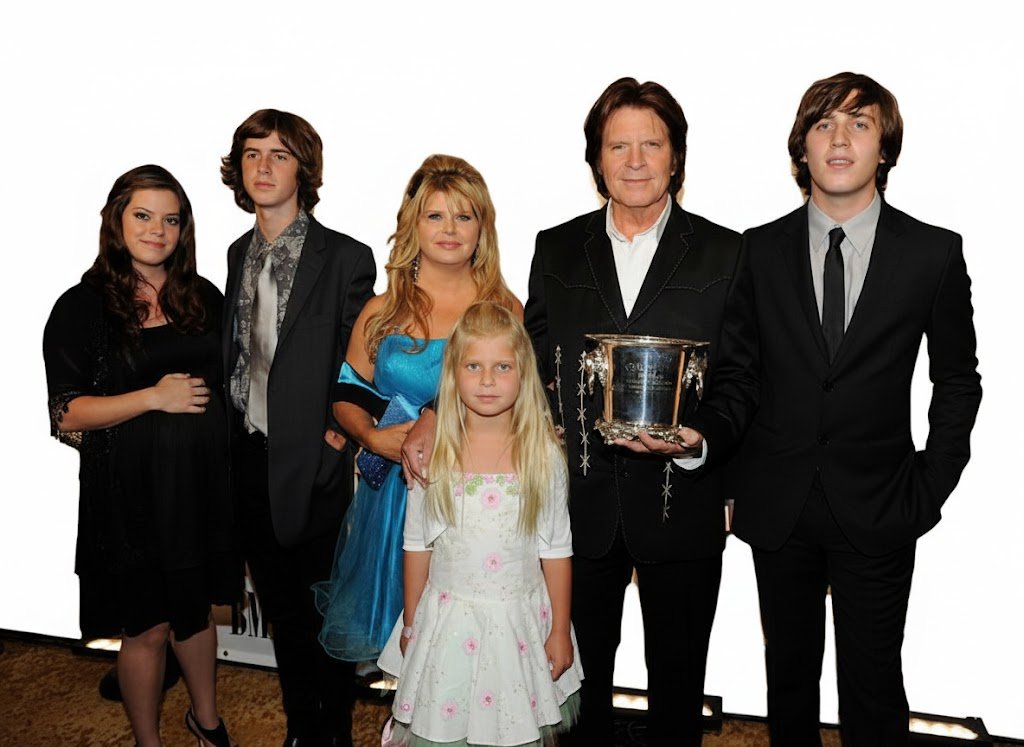
The Woman Behind the Music Icon: The Story of Julie Lebiedzinski
Julie Lebiedzinski: The Power of a Life Lived Out of the Spotlight
In the mythology of modern music, we celebrate the performers—the faces on the album covers, the voices that echo through arenas, the legends built on sound and spectacle. Yet behind every enduring artist is a life rarely seen, held together not by contracts or fame, but by loyalty, sacrifice, and emotional endurance. For one of rock’s most recognizable voices, that quiet foundation has long been Julie Lebiedzinski.
She is not a celebrity by choice. She does not grant interviews, chase endorsements, or curate a public image. Yet her presence—steady, grounding, and deeply influential—has shaped the trajectory of a career that has crossed decades, genres, and generations. Julie’s story is not about spotlight or applause. It is about what survives after the lights fade.
A Woman Who Chose a Different Path
Long before global tours, platinum albums, and screaming fans, Julie was simply a young woman with her own dreams, values, and sense of identity. Unlike many who later become attached to celebrity life, she did not build her world around aspiring fame. Those who know her describe her as self-contained, practical, emotionally perceptive, and grounded—someone more interested in people than in performance.
When her life intersected with the rising career of a young musician who would eventually become a global rock icon—Aaron Lewis—it marked the beginning of a journey few are fully equipped to handle. As his band rose to prominence and the music industry tightened its grip, Julie faced a pivotal choice: step into the public eye or remain anchored in privacy.
She chose privacy—and never looked back.
Love Before the World Was Watching
Before fame distorted time and space, before backstage passes and security lines became normal, their relationship was built in the ordinary world. It grew through shared routines, quiet struggles, and the kind of emotional familiarity that only develops long before outside forces interfere.
This early foundation would later become critical. When Aaron Lewis transitioned from a rising regional act to a nationally recognized artist, the pressures surrounding their relationship intensified almost overnight. Fame does not arrive gradually—it detonates.
Suddenly, their lives were being shaped by:
- Tour schedules that erased normal time rhythms
- Media speculation that redefined privacy
- Financial changes that altered social dynamics
- Public attention that converts intimacy into spectacle
Yet Julie remained the same person she had been before any of it began. That unwavering personal identity became one of the most stabilizing elements in their shared life.
Read More Blogs: Prostadine Colibrim Side Effects and Safety Information: What Every Man Must Know Before Using It
Life Inside the Touring Machine
To understand Julie’s invisible labor, one must understand the unforgiving mechanics of the music industry. Touring—especially at the global level—is not glamorous. It is logistical warfare: crowded buses, brutal schedules, rotating time zones, and months spent away from home.
As Aaron performed in major music hubs like Los Angeles and New York City, Julie lived the parallel reality of the person left behind. This meant managing the emotional distance, maintaining the household, and absorbing the stresses that touring transfers onto the home base.
For many couples, touring destroys the relationship. Loneliness, miscommunication, temptation, and emotional exhaustion erode trust. Julie’s role in surviving this environment required more than patience—it demanded emotional architecture: the ability to hold stability in place while everything else moved.
She reportedly did not interfere in the music. She did not manage tours or influence creative direction. Instead, she protected something more valuable: the mental and emotional safety of the person returning from the storm.
Marriage Under a Microscope
Being married to a famous musician is not simply being married with added attention—it is being married under surveillance. Every public appearance becomes a statement. Every absence becomes a rumor. Every private struggle risks being distorted into public speculation.
Julie chose from the beginning to opt out of this economy of exposure. While many celebrity spouses leverage attention into social media influence or personal branding, she did the opposite: she withdrew.
This withdrawal was not weakness—it was strategy.
By not feeding the media machine, Julie denied it leverage. She made herself unmarketable as a spectacle, preserving the boundaries of her personal world. Over time, this decision built a protective wall around her family—one that even aggressive celebrity journalism struggled to penetrate.
Motherhood in the Shadow of Fame
Perhaps no role reveals Julie’s strength more clearly than motherhood. Raising children while one parent exists as a global figure adds layers of psychological complexity that few families ever encounter.
Children of famous parents often struggle with:
- Identity confusion
- Public intrusion at school and social life
- Unrealistic expectations
- Emotional absence due to travel
- The burden of inherited visibility
Julie recognized these dangers early. Those familiar with the family describe her as fiercely protective, determined to give her children a childhood that felt as ordinary as possible. This meant shielding them from cameras, limiting their exposure to industry environments, and emphasizing values rooted in normal daily life rather than public status.
In this way, Julie did not just protect her children from fame—she protected them from being defined by it.
The Psychological Weight of Loving an Artist
Artists live at emotional extremes. The same sensitivity that fuels creativity also produces vulnerability. Self-doubt, perfectionism, creative pressure, and public judgment are constant companions.
Julie’s role was not to fix these pressures—but to remain present through them.
There were moments of career uncertainty. There were periods when critical reception shifted. There were times when the industry itself changed direction. Each transition carried psychological weight—and someone had to absorb the human impact behind the professional headlines.
While fans experienced these changes through albums and tours, Julie experienced them through exhaustion, frustration, fear, and resurgence—all without applause.
Philanthropy Without a Face
In contrast to celebrity charity culture—defined by galas, cameras, and branding—Julie’s relationship to philanthropy is reportedly deeply private. Her involvement in community support, children’s causes, and health-related initiatives has surfaced quietly over the years, often connected indirectly to benefit concerts or fundraising tied to industry events such as the Grammy Awards.
Yet Julie herself is rarely seen at these functions. Her giving is unbranded, which in the modern attention economy makes it almost radical.
She demonstrates a philosophy that charity does not require recognition to be meaningful.
The Toll That No One Sees
The cost of loving a music icon is rarely measured in headlines. It is measured in:
- Missed milestones
- Sleepless nights
- Emotional suppression for the sake of stability
- The burden of being the sole emotional constant
The public sees the artist’s exhaustion after a tour. They do not see the exhaustion of the person who kept life functioning while the artist was gone.
Julie did not live the chaos—she contained it.
Why Her Story Endures
In an industry filled with fleeting relationships and high-profile collapses, the endurance of Julie’s marriage stands out because it is not fueled by spectacle. It is fueled by:
- Consistency
- Emotional intelligence
- Boundary-setting
- Loyalty without ownership
- Strength without visibility
She is not an accessory to fame. She is the infrastructure beneath it.
The Power of Choosing to Remain Unseen
The modern celebrity world rewards exposure. Julie rejected that currency. She never attempted to convert her proximity to fame into authority, image, or identity. Instead, she preserved her selfhood.
This refusal is perhaps her most defining trait.
In doing so, she preserved something rare and endangered in the celebrity ecosystem: a life that belongs to the people living it.
A Legacy That Will Never Be on a Billboard
Julie Lebiedzinski will never headline a festival. Her name will never shine on a marquee. She will never be introduced to a roaring crowd. And yet the career of a major American rock icon was shaped, protected, and sustained in no small part because she was there—day after day, year after year.
Her legacy is not written in gold records.
It is written in:
- A family that survived fame intact
- A marriage that endured under impossible conditions
- A home that remained real while the world turned unreal
- A life that proved visibility is not the same as value
Julie Lebiedzinski is not famous.
She is something far rarer.
She is foundational.