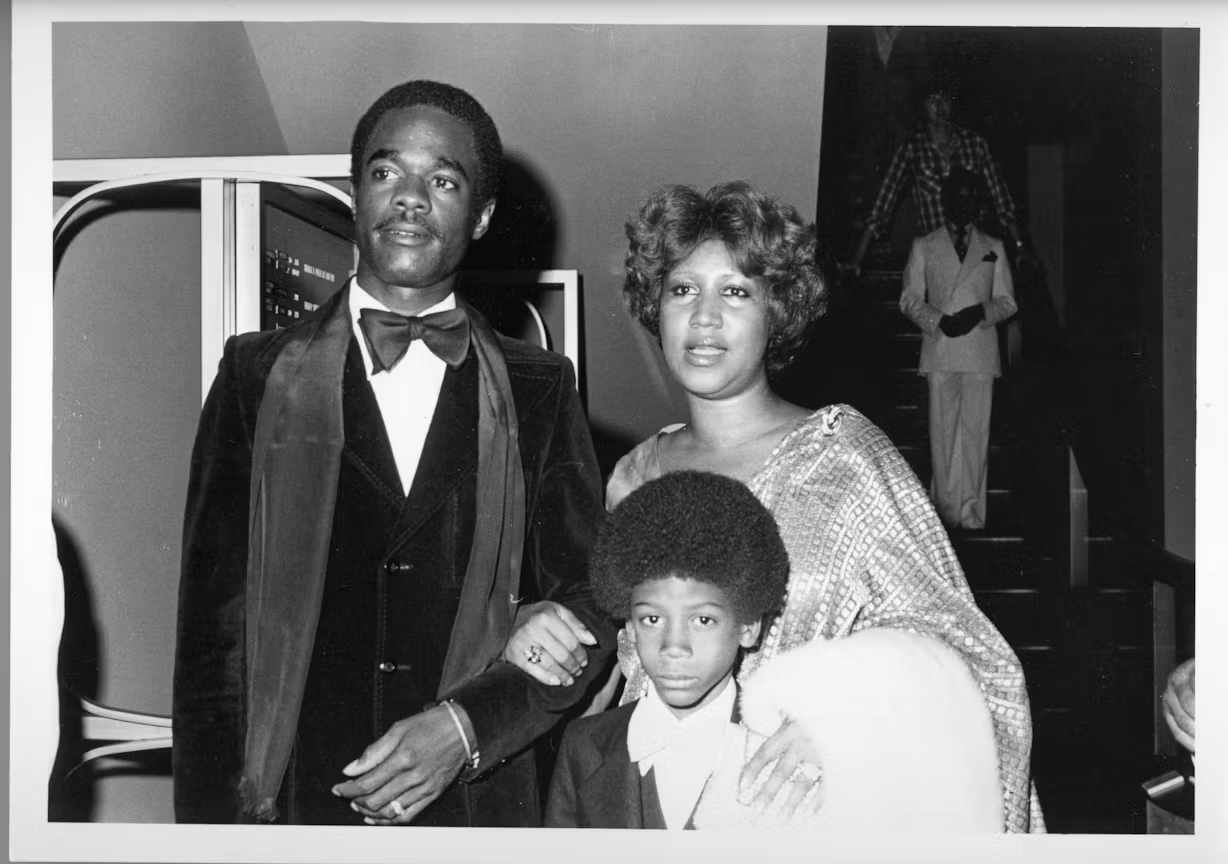
Who Is Kecalf Cunningham? The Story of Aretha Franklin’s Son
Who Is Kecalf Cunningham? The Story of Aretha Franklin’s Son
When people think of Aretha Franklin, they think of power, soul, and an unmistakable voice that helped define American music. Known forever as the “Queen of Soul,” Aretha Franklin’s legacy feels almost mythic. Yet behind the legend was a woman who was also a mother—protective, private, and deeply complex. One of the least publicly understood figures in her personal world is her youngest son, Kecalf Franklin Cunningham.
Kecalf’s story is not one of constant spotlight or celebrity excess. Instead, it is a quieter, more layered narrative about identity, faith, family responsibility, and the weight of carrying one of the most famous surnames in music history.
Early life: born into fame, raised in privacy
Kecalf Franklin Cunningham was born in 1970, at a time when Aretha Franklin was already an international superstar. His father, Ken Cunningham, worked as Aretha’s road manager, meaning Kecalf was born directly into the orbit of touring schedules, recording studios, and global recognition.
Despite that environment, Aretha was famously protective of her children. She did not parade them in the media or use motherhood as a branding tool. In fact, for much of her career, fans knew very little about her life at home. This deliberate separation meant that Kecalf grew up close to greatness without being consumed by it publicly.
From a young age, he witnessed both sides of fame: the adoration and the pressure, the success and the cost. That dual exposure shaped the man he would later become—someone aware of legacy but not eager to live inside its shadow.
A family of brothers, each with a different path
Kecalf is the youngest of Aretha Franklin’s four sons. His older brothers—Clarence, Edward, and Teddy—each carved out very different lives. Some were drawn to music in various forms, while others faced personal challenges that required care and support.
Growing up in this family meant that Kecalf was never just “Aretha’s son.” He was also a younger brother, observing how fame touched each sibling differently. That perspective appears to have influenced his more grounded public demeanor and his focus on family rather than celebrity.
Unlike families where children are pushed toward replicating a parent’s success, Aretha’s household allowed space—sometimes messy, sometimes painful—for individuality. Kecalf’s eventual choices reflect that freedom.
Music on his own terms
Music was always present in Kecalf’s life, but he did not pursue it in the same way—or the same genre—as his mother. Rather than soul or traditional R&B, Kecalf gravitated toward Christian and gospel-influenced rap and songwriting.
This choice is telling. Christian rap is a niche genre that prioritizes message over mainstream appeal. It does not come with automatic fame, even if your mother is Aretha Franklin. By choosing this lane, Kecalf signaled something important: he wanted authenticity over comparison.
His work has often been described as faith-driven, reflective, and personal. Instead of trying to compete with an impossible legacy, he carved out a creative space that aligned with his beliefs and personal experiences.
Faith as a foundation
Faith has been a recurring theme in Kecalf Cunningham’s life. While Aretha herself had deep gospel roots, Kecalf’s expression of faith appears more central to his identity than his pursuit of fame.
Those who have followed his story often note that faith provided structure—especially during moments of loss, stress, and public scrutiny. It also appears to have influenced how he approached family life, parenting, and conflict.
In many ways, Kecalf’s spiritual grounding distinguishes him from the stereotypical narrative of celebrity children. His life reflects restraint rather than excess, introspection rather than spectacle.
Marriage, fatherhood, and a life beyond headlines
Kecalf is married and is the father of several children, including Jordan, Victorie, and Grace. Through them, Aretha Franklin’s legacy continues not only as a cultural force but as a family lineage.
Fatherhood has been a defining role for Kecalf. While his public appearances are limited, those that exist often show him alongside his wife and children, particularly during moments tied to his mother’s memory. His priorities appear clear: stability, presence, and continuity.
One of his daughters, Grace, has attracted attention for her own singing talent, reminding the public that musical gifts often flow naturally through generations—even when they are not forced.
The turning point: Aretha Franklin’s death
In August 2018, the world mourned Aretha Franklin’s passing. For Kecalf, the loss was not just cultural—it was deeply personal. As a son, he lost his mother; as a family member, he entered a period of emotional and legal complexity.
Aretha did not leave behind a single, clear, typewritten will. Instead, handwritten documents from different years surfaced, triggering a prolonged legal dispute among her sons. What followed was a highly public probate case that exposed private family matters to global attention.
This was the moment when many people first learned Kecalf Cunningham’s name.
The estate battle and its emotional weight
The legal proceedings centered on determining which handwritten will represented Aretha Franklin’s final wishes. Ultimately, a later document was recognized as valid, reshaping how her estate would be distributed.
For Kecalf, the outcome carried both practical and symbolic significance. The ruling granted him responsibility and inheritance tied to property that held deep emotional meaning—most notably the home where one of the handwritten wills was discovered.
This moment repositioned Kecalf in the public eye. No longer just the youngest son, he became a key steward of his mother’s personal legacy. The role was not glamorous. It came with scrutiny, pressure, and the burden of honoring a woman whose life belonged partly to the world and partly to her family.
Midway through the legal discussions and renewed public interest, many readers sought broader context about the Franklin family, often turning to resources like Aretha Franklin’s children and family legacy to better understand where Kecalf fit into the larger picture.
Personal struggles under a famous name
Kecalf’s life has not been without difficulty. After his mother’s death, he faced personal legal challenges that briefly brought unwanted media attention. These moments were often reported with little nuance, framed primarily through his connection to Aretha Franklin.
Yet these experiences also highlight a larger truth: being the child of a global icon does not protect someone from ordinary human mistakes. If anything, it magnifies them.
What stands out is that Kecalf did not attempt to leverage these moments for sympathy or publicity. Instead, he receded again into privacy, reinforcing the sense that he never sought fame for its own sake.
Carrying a private legacy in a public world
Aretha Franklin’s musical legacy is immortal. Her recordings, performances, and influence will continue to shape artists for generations. But her private legacy—her homes, her handwritten notes, her family relationships—required someone to carry it forward with care.
In many ways, Kecalf Cunningham has become one of the quiet custodians of that personal history. This role does not involve microphones or stages; it involves decisions, responsibilities, and remembrance.
It also involves protecting the next generation from the same pressures he grew up with—allowing them to choose who they want to become, rather than who the world expects them to be.
Who Kecalf Cunningham really is
So who is Kecalf Cunningham, beyond the headlines and legal documents?
He is a son who grew up alongside greatness without trying to imitate it.
He is a man of faith who chose meaning over mainstream success.
He is a husband and father who prioritizes family over fame.
And he is a legacy-holder navigating the complex space between public history and private memory.
Kecalf Cunningham’s story reminds us that not every powerful life is loud. Some unfold quietly, shaped by responsibility, belief, and the enduring influence of love rather than applause.
If Aretha Franklin taught the world how to sing with authority, her youngest son is showing what it means to live with intention—outside the spotlight, but never outside the legacy.
Read More Blogs: Eagles vs Ravens Match Player Stats, Key Performers & Analysis